For people living with lymphedema, managing swelling, pain and limited movement can be a daily challenge. RiverView Health offers specialized lymphedema services to help patients better manage their symptoms and improve their mobility and quality of life.
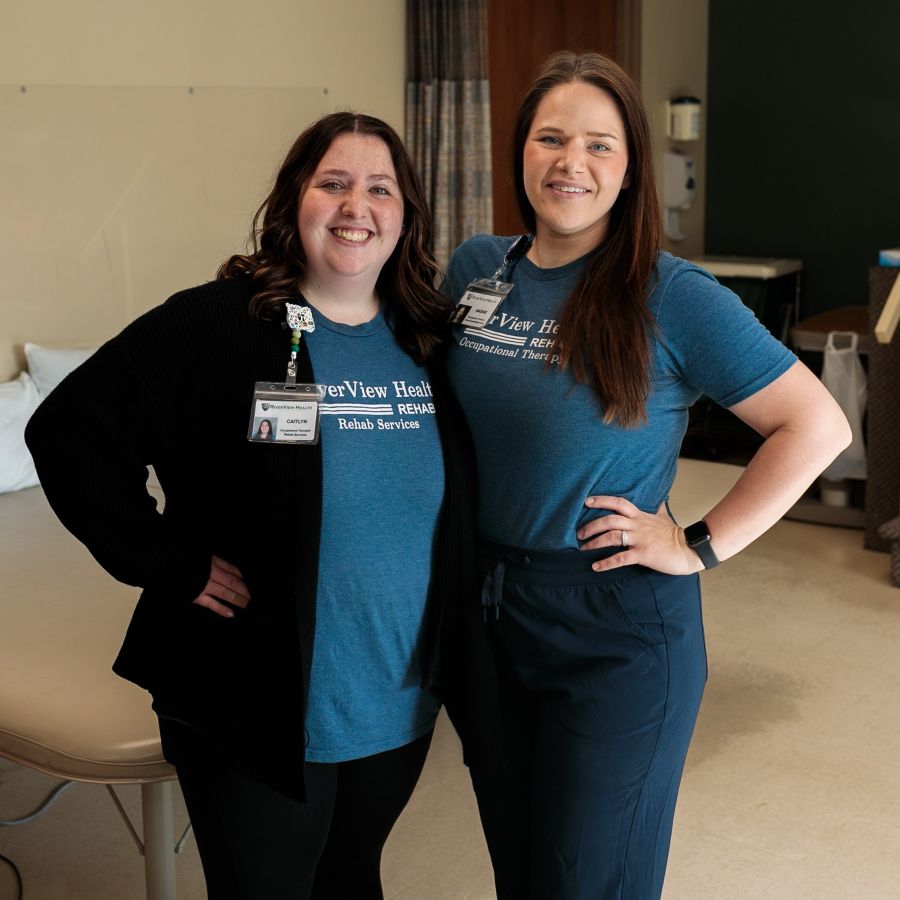
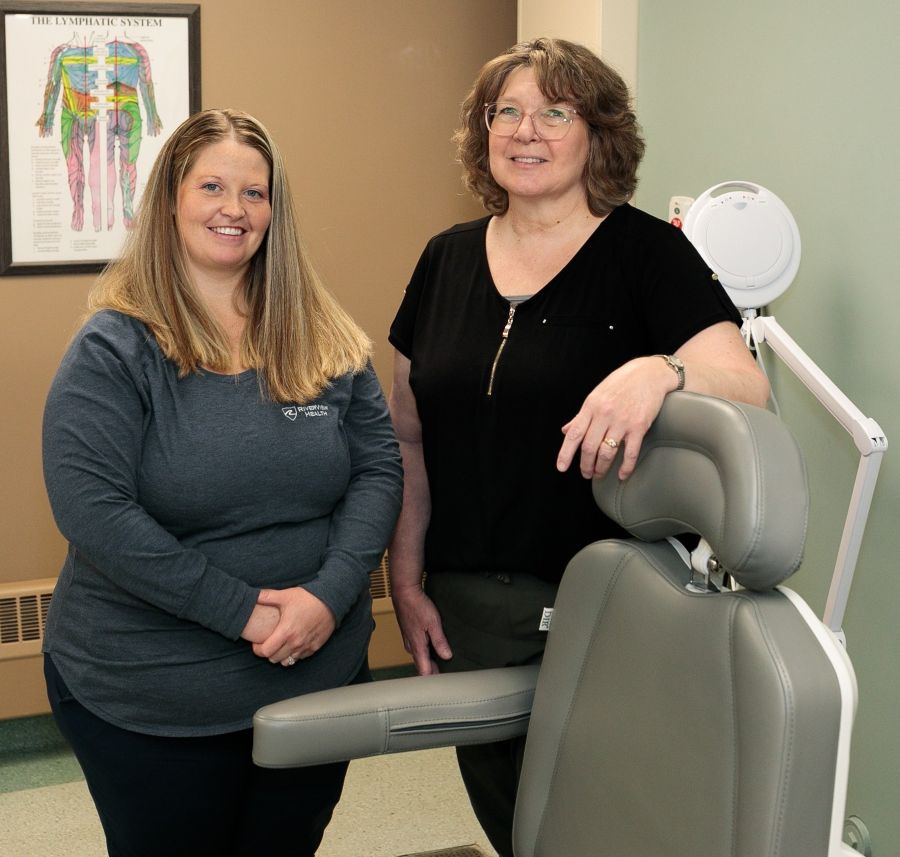
RiverView is fortunate to have four certified lymphedema specialists with a wide range of knowledge and experience. Maddie Engelstad and Caitlyn Fussy offer lymphedema services through Occupational Therapy, while Lori Hefta and Ashley Leines provide care through Physical Therapy.
Engelstad has been a certified lymphedema therapist since November 2023 and sees patients in Fertile and Crookston. Fussy earned her certification in August 2025 and provides services in East Grand Forks and Crookston. Leines sees patients in Red Lake Falls and Crookston and has been certified since 2021. Hefta has provided lymphedema services since 1998, before formal certification was available. When the national certification became an option in 2002, she completed the requirements and became certified. She sees patients in Crookston.
Living with Lymphedema
Lymphedema is a chronic condition in which excess lymph fluid collects in the body’s tissues, causing swelling. It occurs when the lymphatic system, which is part of the immune system and helps move fluid and waste throughout the body, is damaged or not functioning properly.
There are two types of lymphedema. Primary lymphedema results from a malformation of the lymphatic system and may be present at birth or develop later in life. Secondary lymphedema results from damage to the lymphatic system and can occur following cancer treatment, surgery, radiation, trauma, infection or other conditions.
“Lymphedema can affect a person’s mobility and ability to perform everyday activities,’’ Hefta explained. “Our role is helping patients with chronic edema (swelling) issues have improved mobility and function with learning tools to self-manage their symptoms.’’
Over the years, Hefta has seen many changes in the treatment and management of lymphedema.
“The most significant change I have seen is the medical provider recognizing edema issues and ordering the lymphedema treatment in larger volumes, which has necessitated the increased demand of having occupational and physical therapists certified in lymphedema treatment.’’
Patients today also have more choices when it comes to compression products often used in treatment.
“There are more companies producing the compression garments for patient use,’’ Hefta stated. “Twenty-five years ago, there were three or four main companies and now there are numerous places for the patient to purchase the products.’’
RiverView patients have access to compression products through the RiverView Pharmacy, which now offers over-the-counter compression stockings, Engelstad reported. She and the other lymphedema therapists can measure patients and recommend the appropriate size of compression stockings based on their individual needs.
Individualized Treatment
Lymphedema treatment is tailored to each patient’s needs. RiverView’s specialists use a variety of approaches, including compression garments and wraps, bandaging, manual lymphatic drainage, exercise, and self-care techniques.
Gentle, specialized massage techniques, known as manual lymphatic drainage, can help encourage the movement of lymph fluid away from an affected area. Exercise also can help. Muscle contractions help move fluid through the lymphatic system, while activities that increase the heart rate and breathing can help reduce swelling.
For some patients who qualify, a pneumatic compression pump may be another option for managing lymphedema. Fussy explains that the device helps stimulate the lymphatic system and move lymph fluid away from the affected area.
“The pump is similar to the manual lymphatic drainage that we complete with patients,’’ Fussy said. “The benefit is that patients can use it at home as part of their self-management.’’
Compression garments or wraps also provide support to help control swelling and are often an important part of long-term management. Therapists work with patients to determine which approaches are most appropriate for their individual circumstances.
The goal is not simply to treat the swelling in the clinic, but to help patients learn strategies they can use to manage their condition over time.
Hefta encourages patients to remain proactive in their treatment. “It can take time with trial and error to find the best combination of treatment approaches that work for you. It is a very individualized treatment. Early detection and treatment are key.’’
RiverView’s team of certified lymphedema specialists can help patients develop an individualized plan to manage symptoms, improve function, and maintain their independence.
For more information on lymphedema services, talk to your primary care provider or call Rehab Services at 218-281-9463.