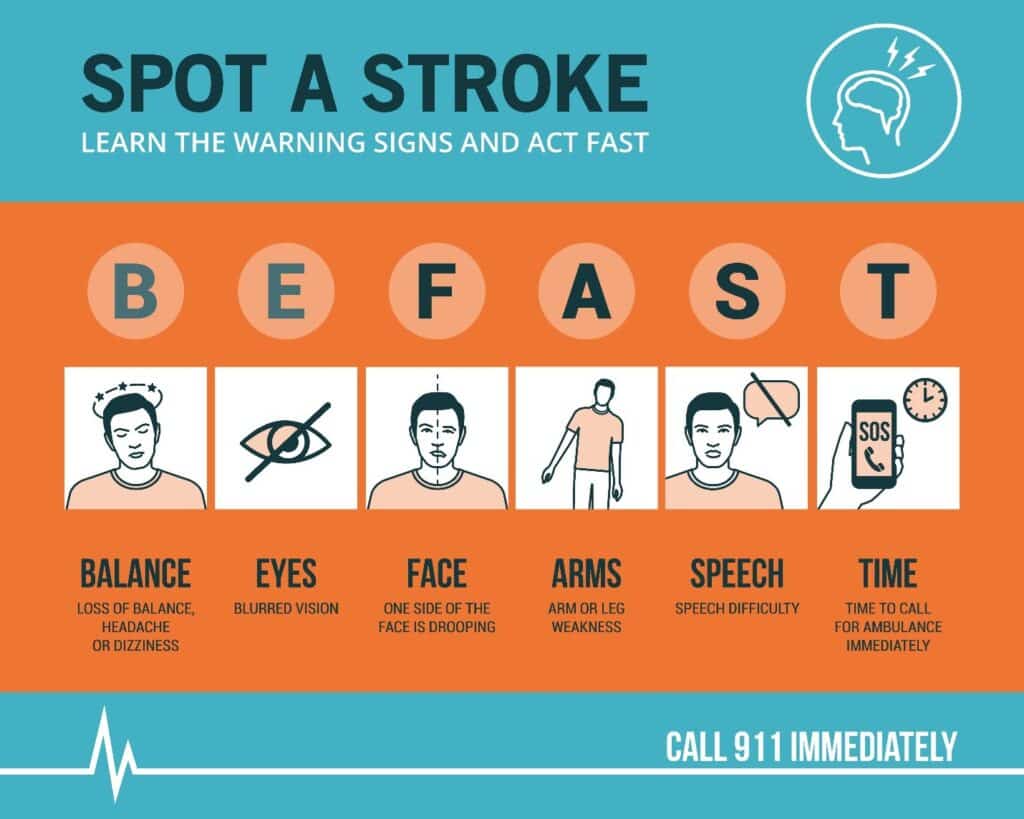
Every second counts when someone is having a stroke. That is why it is vital that RiverView Health is equipped and ready to evaluate, stabilize, and provide emergency treatment to patients with acute stroke symptoms—improving the chances of better outcomes.
The Minnesota Department of Health (MDH) recently redesignated RiverView as an Acute Stroke Ready Hospital (ASRH). This designation is part of the Minnesota Stroke Program, which is committed to reducing the burden of stroke by increasing community awareness, providing ongoing education for healthcare providers, and continuously improving the statewide system of stroke care.
“Being an Acute Stroke Ready Hospital ensures prompt, efficient stroke care aligning with state guidelines and standards when time is critical,” shared Kayla Jossund, RN, and RiverView’s Trauma/Stroke Program coordinator since fall 2024. “This designation provides us with the knowledge, tools, and resources to improve the outcomes and quality of the lives of our patients.”
MDH’s goal is to ensure hospitals meet stroke-ready criteria so that all Minnesotans live within 30 minutes of a facility prepared to deliver the best possible stroke care. Currently, 94% of Minnesotans fall within that 30-minute window.
Types of Stroke
A stroke occurs when blood flow to the brain is blocked or when a blood vessel in or around the brain bursts. This can result in brain damage, causing long-term disability or even death.
The three main types of stroke are:
- Ischemic stroke – caused by a blockage cutting off blood supply to the brain.
- Hemorrhagic stroke – caused by a blood vessel in the brain leaking or bursting.
- Transient ischemic attack (TIA) – often called a “mini-stroke,” caused by temporary blockage.
Symptoms vary depending on where in the brain the stroke occurs and how much tissue is affected.
Meeting Requirements, More
RiverView meets the MDH designation requirements in several key ways. An emergency team is available 24/7, including an Emergency Department physician, RN, and staff from both the Lab and Diagnostic Imaging. The team completes required stroke education, and all stroke charts are reviewed for ongoing performance improvement.
RiverView’s Emergency Department also maintains close communication with local Emergency Medical Services to prepare before a patient arrives, allowing the team to act quickly once the patient is on site.
Stroke patients at RiverView can also receive Tenecteplase, a medication that quickly breaks down blood clots and restores blood flow to the area, helping prevent further injury to the tissue. Not all critical access hospitals are equipped to provide this treatment.
If a higher level of care is required, patients are transferred by ground or air ambulance to a comprehensive stroke center.
Emergency, Inpatient, and Outpatient Services
RiverView’s Emergency Department (ED) treats 30–40 stroke patients each year, according to Jossund. About 60% of these patients experience ischemic strokes, and a similar percentage require transfer to a comprehensive stroke center for advanced care.
For patients who can be treated at RiverView—either in the ED, on the Inpatient Unit, or through Outpatient Services—care extends beyond nursing and physician support. RiverView provides physical, occupational, and speech therapy, and RiverView Home Care is available for additional support in the home.
The average stroke patient at RiverView is 75 years old, Jossund reported. Although strokes are more common among older adults, nearly one-quarter occur in people younger than 65.
Common comorbidities among RiverView stroke patients include Type 2 diabetes, high blood pressure, high cholesterol, heart disease, and tobacco use.
Prevention
According to 2024 guidelines from the American Heart Association (AHA) and the American Stroke Association (ASA), up to 80% of strokes may be preventable through healthy lifestyle choices and risk factor management.
The AHA recommends:
- Healthy eating
- Physical activity
- Quitting tobacco
- Adequate sleep
- Maintaining a healthy weight
- Controlling cholesterol
- Managing blood sugar
- Managing blood pressure
Research suggests that following these guidelines could help prevent an estimated 10,000 strokes per year in Minnesota.
The first step in prevention is visiting with your primary care provider to discuss your risks. If you do not have a provider, all RiverView Family Medicine and Internal Medicine providers are taking new patients. Call 281.9595 to schedule an appointment.