Today’s Severe Weather Awareness Week topic is Extreme Heat. Heat-related deaths account for more deaths on an average year in the United States than floods, tornadoes, lightning, and hurricanes combined.
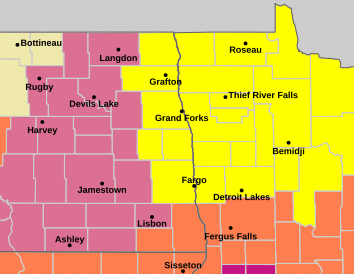
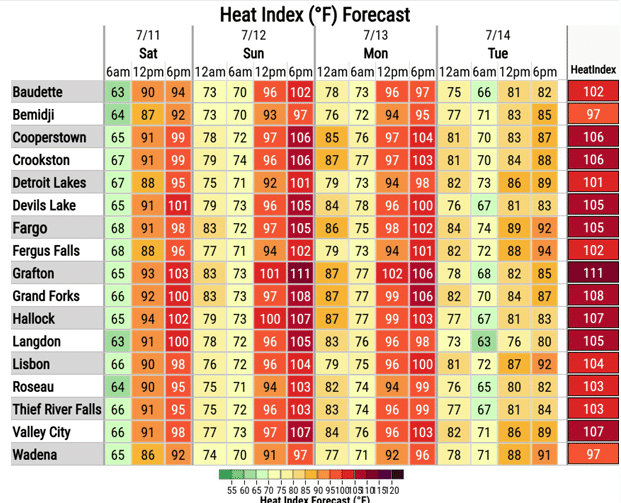
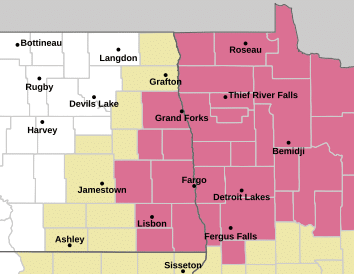
There are three types of heat warnings indicted by the National Weather Service using the Heat Index explains Crookston Firefighter Chris Klawitter. “The National Weather Service issues three types of warnings for extreme heat,” said Klawitter. “The first is an Excessive Heat Outlook that lets everybody know there could be possible extreme heat situations in the next three to seven days. In an Excessive Heat Watch, the conditions are right in the next 24 to 72 hours for an extreme heat event. An Excessive Heat Warning or Advisory is issued when the extreme heat is actually occurring. They measure that using the Heat Index, which factors in the temperature and the relative humidity. Typically, warnings are issued when the Heat Index is expected to exceed 105 degrees.”
There are several indicators of heat-related illness from heat cramps, which is muscular pain and spasms in the legs or abdomen, to cool, moist, pale or flushed skin, headaches, nausea, dizziness, heavy sweating, weakness, exhaustion, hot red skin, changes in consciousness and high body temperature. The more severe symptoms can be deadly, especially for the young or elderly explains Klawitter. “A lot of things can happen when you get too hot,” said Klawitter. “You can get different heat disorders like heat exhaustion and heat stroke. These are something to take seriously. These can be deadly, especially with young children and elderly people.”
Staying inside or if you have to be outside, making sure you stay hydrated are the best way to avoid heat-related illness says Klawitter. “The best thing you can do is stay hydrated,” said Klawitter. “Drink plenty of water. When you sweat you get dehydrated so be mindful of that as the temps go up. If you get too hot, go inside, get in the shade, or find somewhere cooler. Never leave any person or pet in a closed car. Check on neighbors, especially elderly neighbors who don’t get out too often. Protect yourself from the sun using appropriate headwear and sunscreen.”
Tags: