April is National Occupational Therapy (OT) Month, making it the perfect time to highlight RiverView Health’s newest OT service—the Vivistim Paired VNS (vagus nerve stimulation) System—and the team helping stroke patients regain independence and improve their quality of life.
The Vivistim system is designed for individuals who have experienced an ischemic stroke, the most common type of stroke, accounting for about 80% of all cases. These strokes occur when blood flow to the brain is blocked and can lead to long-term challenges such as weakness on one side of the body, difficulty speaking, memory loss, and trouble with movement and daily activities.
For patients with limited use of their arm and hand after a stroke, Vivistim offers new hope. The system is designed to improve upper-limb function and help individuals return to everyday activities like preparing food, playing cards, or buttoning a shirt.
“Vivistim is supported by strong functional outcomes and has the potential to increase independence and improve participation in meaningful daily activities,’’ shared Allie Reiffenberger, OTD, OTR/L.
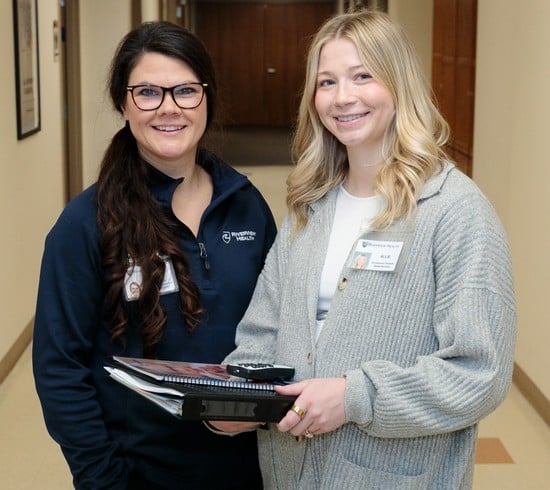
Reiffenberger and Olivia Pemberton, OTR/L, recently completed comprehensive Vivistim training and are approved providers. They lead RiverView’s Vivistim outpatient therapy program in Crookston’s Rehab Services Department.
Vivistim is FDA-approved and works by combining vagus nerve stimulation with targeted rehabilitation exercises. Studies show this approach can lead to two to three times greater improvement in hand and arm function compared to therapy alone—even years after a stroke.
The system includes a small device that is implanted under the skin in the chest and connected to the vagus nerve in the neck. This same-day surgical procedure is performed by a neurologist and is currently available in Fargo.
Following implantation, RiverView’s specially trained occupational therapists guide patients through therapy using the required device protocol to help ensure optimal outcomes. During therapy sessions, a wireless remote directs the device to deliver gentle stimulation while patients perform specific exercises. This paired approach helps the brain form new neural connections, supporting recovery and improved movement. Continued progress also takes place at home through exercises and daily activities performed using a handheld magnet to activate the device.
“Being in a rural community, it’s especially meaningful that we can now offer this service locally,’’ stated Reiffenberger. “In the past, some patients may have been deterred from pursuing elective surgery (implanting the small device) due to the travel and intensive therapy required afterward. Now, they have access to this advanced care much closer to home.’’
Reiffenberger went on to explain the impact the system can have on stroke survivors in the area, even years after the stroke occurred. “We’re especially excited because this technology applies to a large population. Anyone who has experienced an ischemic stroke more than six months ago can be evaluated to determine if they’re a good candidate.’’
For more information on the Vivistim system, visit vivistim.com. If you believe you or a loved one may be a candidate, talk with your primary care provider or neurology team about your options and to begin the referral process.